
How to Use Packaging Foam Rolls to Protect Products During Shipping
A product can leave a warehouse in perfect condition and still arrive with scratches, scuffed surfaces, chipped edges, or broken components. Often, the problem isn’t
Need bulk pricing or have a specific shipping request? Contact us!
Choosing packaging foam rolls may seem straightforward until you start comparing different materials, thicknesses, widths, and roll lengths. A thin foam sheet might be suitable for separating polished surfaces, while another product could need deeper cushioning or a different protective packaging material altogether.
The right choice depends on what you’re protecting, the type of damage you’re trying to prevent, and how the material fits into your packing process. Understanding those requirements can help businesses avoid unnecessary packaging costs while selecting materials that provide appropriate protection.
This guide explains the major types of packaging foam, how thickness and density affect performance, where different foam formats work best, and how to select a suitable roll for your products.
Packaging foam rolls are continuous lengths of flexible foam used for protective wrapping, surface separation, and cushioning. They are particularly useful when businesses need material that can be cut to accommodate products of different sizes and shapes.
Many packaging foam rolls and pouches use polyethylene (PE) foam, a lightweight material that can provide a non-abrasive separation layer between products and surrounding packaging.
Foam wrapping serves two related but different purposes. Surface protection helps reduce scratches, rubbing, and abrasion, while cushioning helps manage impacts or vibration. The same foam can contribute to both, but the degree of protection depends on its properties and the complete packaging arrangement.
Flexible rolls are commonly used by manufacturers, distributors, ecommerce businesses, furniture suppliers, and warehouses that handle products with varied dimensions and surface finishes.
Not all packaging foam behaves the same way. Material composition, cellular structure, density, and physical format affect what the foam is best suited to protect.
Polyethylene foam is commonly supplied in flexible rolls for protective packaging. Its closed-cell structure makes it lightweight and generally resistant to moisture absorption.
PE foam is particularly useful for surface protection, interleaving, and separating finished products during handling, storage, and shipping. Depending on the grade and thickness, it can also provide lightweight cushioning.
Typical applications include protecting polished metal components, furniture finishes, painted parts, glass surfaces, and other products vulnerable to scratching.PE foam rolls are available in different thicknesses and densities. Thin grades usually provide greater flexibility and less bulk, while thicker grades can offer additional separation and cushioning depth.
However, polyethylene foam is not a single standardized material. Different grades may compress and perform differently even when their dimensions appear similar.
Polyurethane foam is another widely used protective packaging material. It is available in soft, compressible forms as well as more specialized cushioning products and fitted inserts.
Certain polyurethane grades can provide a conformable cushioning layer for delicate products or components that require controlled positioning.Unlike the thin PE wrapping commonly supplied in rolls, polyurethane cushioning may be selected for its compression characteristics or ability to support specific product shapes.
The appropriate choice depends on the foam’s formulation, density, firmness, and intended application. Polyurethane and polyethylene should not be treated as interchangeable simply because both are called packaging foam.
Electronic products and components may require electrostatic discharge protection in addition to cushioning. Specialized foam materials are manufactured for particular static-control applications, but there is an important distinction between anti-static, static-dissipative, conductive, and static-shielding packaging.
Ordinary foam rolls should never be assumed to provide ESD protection.
For circuit boards, sensitive components, and other products with specific electrical requirements, confirm the relevant material properties and packaging specifications before selecting a solution.
The physical form of the foam can be just as important as its material.
| Packaging format | Main advantage | Best suited to |
| Foam rolls | Flexible lengths and cutting options | Mixed-size products and variable packing needs |
| Foam sheets | Consistent flat pieces | Layering, interleaving, and surface separation |
| Foam pouches | Preformed protective enclosure | Repetitive packing of similarly sized products |
| Foam blocks or fitted inserts | Defined positioning and support | Components needing controlled cushioning or movement restriction |
| Specialized ESD foam | Verified static-control properties | Suitable static-sensitive electronic products |
Businesses handling products of many sizes often benefit from the flexibility of rolls. Operations packing the same product repeatedly may find that pre-cut sheets or pouches simplify material preparation.
Foam thickness describes the depth of the material, commonly expressed in fractions of an inch for packaging foam rolls. It is an important specification, but thicker foam does not automatically mean better protection.
A thin layer may be sufficient when the primary objective is to prevent scratching between smooth surfaces. A product that requires impact cushioning may need thicker material, a different foam grade, or a more structured packaging arrangement.
Four commonly available thicknesses are 1/32 inch, 1/16 inch, 1/8 inch, and 1/4 inch.
| Thickness | Practical starting point | Main consideration |
| 1/32″ | Thin surface separation and interleaving | Very limited cushioning depth |
| 1/16″ | Flexible general-purpose surface protection | A balance between coverage and low bulk |
| 1/8″ | Applications requiring additional material depth | More cushioning space, subject to foam grade |
| 1/4″ | Thicker separation and cushioning applications | Greater package bulk and potentially different compression behavior |
These examples should be treated as selection guidance, not universal performance ratings.
The actual specifications of PE foam protective packaging wrap illustrate how different thicknesses can be supplied in different roll widths and lengths. Comparing those dimensions together is more meaningful than evaluating thickness in isolation.
The important question is what the foam must accomplish. For polished products that need separation from neighboring items, thin material may be sufficient. For a fragile or heavy object, greater thickness might help, but it should be evaluated alongside the product weight, expected handling, and outer packaging.
Density describes how much mass a foam contains within a given volume. Along with its cellular structure and formulation, density influences how the material behaves under pressure.
Two foam rolls with the same thickness may respond differently when compressed. One might be softer and more easily deformed, while another provides greater resistance.
Neither characteristic is automatically better.
A soft foam may conform closely to a delicate surface, while a firmer grade may be more suitable where the product requires greater resistance to compression. The correct choice depends on the application. For demanding shipments, technical cushioning data and representative packaging tests provide a more reliable basis for selection than density or thickness alone.
Material performance is only one side of the purchasing decision. Roll dimensions and dispensing features also affect usability, material consumption, and packing efficiency.
Roll width determines how much surface can be covered by a single piece of foam.Narrow rolls can be convenient for smaller products and packing stations with limited space. Wider rolls may be preferable for panels, furniture components, or other products that require broader coverage.
For instance, 12-inch and 24-inch widths are among the available configurations for polyethylene foam wrapping. Selecting between them requires considering the dimensions of the products being protected. A roll that is too narrow may require several overlapping pieces. An unnecessarily wide roll may create excess offcuts.
The most practical width is usually one that covers a useful portion of the product while minimizing unnecessary trimming.
Roll length is the total linear footage supplied. It is important to compare roll length alongside width and thickness, rather than treating footage alone as an indication of value.
For example, a 1/16″ × 12″ × 625′ foam roll and a 1/4″ × 12″ × 85′ roll represent very different material specifications. Their suitability cannot be determined from footage alone. Thicker foam also occupies more space when wound into a roll, which helps explain why rolls of different thicknesses can contain substantially different amounts of material.
A useful comparison looks at the amount of foam needed per product, the total usable coverage, and the protection requirements of the packaging operation.
Perforated rolls have regularly spaced tear lines, allowing material to be separated into predetermined lengths.This can be beneficial for businesses packing similar products repeatedly, as workers may be able to dispense consistent sections without cutting each piece.
Non-perforated rolls provide continuous material that can be cut to different lengths. They can be useful when product dimensions vary considerably. Perforation intervals such as 12 inches are common among certain protective foam configurations, although the available intervals vary by product.
Neither format is inherently superior. The decision depends on product dimensions, packing frequency, and how the foam is dispensed.
The most reliable selection process starts with the product and works backward to the material specification.Rather than buying foam based only on price or thickness, evaluate these five factors.
Determine whether the product needs protection from surface abrasion, minor impacts, vibration, or contact with neighboring items. These requirements are related but not interchangeable.
A highly polished component may need a thin non-abrasive layer more than deep cushioning. A fragile instrument may need carefully designed cushioning and structural support in addition to surface protection.If the packaging must address several risks, consider whether multiple protective components are necessary.
Weight influences the pressure placed on cushioning materials. Product shape determines where concentrated loads or vulnerable edges may occur. Surface finish is another important factor. Polished, painted, coated, or otherwise delicate products may require a compatible protective layer to prevent marks, scratches, or unwanted material contact.
A smooth product with broad flat surfaces may be suitable for flexible foam wrapping. Products with sharp projections or highly fragile components may require additional protective materials.
Use the required protection level to narrow the material and thickness options. For surface separation, relatively thin PE foam may provide adequate coverage with minimal bulk. When deeper cushioning is required, consider thicker or differently engineered materials.
Density, compression behavior, and any specialist properties should be evaluated where relevant. For particularly fragile or high-value shipments, material specifications should be supported by packaging tests rather than assumptions.
Consider how the material will be used in day-to-day packing operations. Businesses shipping products of varying sizes often benefit from continuous or perforated roll stock. Businesses handling standardized products may prefer repeatable sheet lengths or preformed pouches.
Choose a width that suits typical product dimensions and a roll length appropriate to the packaging workload. The aim is to make protective packaging consistent without producing excessive material waste.
Roll price alone does not tell the full story. A lower-cost roll may require more material per shipment or create additional cutting waste. Conversely, a higher-priced specification may not provide meaningful benefits for a simple surface-separation application.
Evaluate the usable material, product coverage, preparation effort, storage requirements, and any additional protective components needed.
The most economical choice is the one that meets the actual protection requirements while fitting the business’s workflow—not necessarily the roll with the lowest upfront price.
Different products present different protection requirements. The following examples can help narrow the options before evaluating the specific material grade.
| Product / application | Main concern | Foam selection direction |
| Polished metal parts | Scratches and surface abrasion | Compatible thin PE foam for separation |
| Furniture panels | Surface contact, scuffing, exposed edges | Flexible PE foam, with separate edge protection where needed |
| Glass and mirrors | Surface damage and breakage | Surface-protective foam plus suitable structural cushioning and edge support |
| Electronic components | Physical damage and potentially ESD | Verify whether specialized static-control packaging is required |
| Precision instruments | Impacts, vibration, and movement | Evaluate cushioning-performance requirements; fitted inserts may be appropriate |
| Repetitive small-product packing | Consistency and preparation effort | Perforated foam rolls or appropriately sized pouches |
| Mixed-size ecommerce inventory | Flexibility and material utilization | Foam rolls in widths suited to common product dimensions |
These are starting points, not guaranteed packaging specifications.
For example, PE foam may protect the surface of a glass panel but cannot necessarily provide enough protection against breakage during a drop. The foam must be evaluated as one element of the complete packaging design.
Packaging foam and bubble wrap can both serve protective functions, but they are often selected for different reasons. Flexible PE foam is particularly useful where products require a relatively uniform, non-abrasive separation layer. Its consistent surface and flexible construction make it suitable for interleaving and protecting many finished products.
Bubble wrap uses air-filled cells to provide cushioning. Depending on bubble size and construction, it can create greater cushioning depth than thin foam wrap.
Neither material is universally better.
| Requirement | Packaging foam rolls | Bubble wrap |
| Surface separation | Particularly useful with compatible non-abrasive grades | May be suitable, but sensitive finishes may need an interlayer |
| Lightweight wrapping | Suitable | Suitable |
| Flat product interleaving | Often convenient | Generally bulkier |
| Cushioning depth | Depends on thickness, density and material grade | Depends on bubble size, film construction and configuration |
| Different product shapes | Flexible grades conform to many products | Flexible rolls conform to many products |
| Sensitive electronics | Verified ESD-specific grades may be required | Verified ESD-specific grades may be required |
For some products, a combination of materials may be appropriate: foam for direct surface protection and bubble cushioning for additional separation or impact protection.
Bubble wrap selection also involves understanding bubble dimensions. Small and large bubbles have different cushioning characteristics, with the differences explained in more detail in this guide to bubble wrap sizes.
The choice between foam and bubble wrap should ultimately be based on surface sensitivity, required cushioning, product weight, and the complete packaging arrangement.
Several purchasing mistakes can lead to inadequate protection, unnecessary material use, or inefficient packing.
Choosing the thickest foam by default. Greater thickness provides more material depth but does not automatically deliver better protection for every product.
Ignoring material density and compression behavior. Foam grades of equal thickness can perform differently under pressure.
Treating all packaging foam as interchangeable. PE foam, polyurethane foam, and specialist foam products can have different properties and intended uses.
Assuming ordinary foam provides anti-static protection. Static-sensitive products may need properly specified ESD packaging.
Comparing rolls only by price or footage. Width, thickness, usable coverage, and material properties affect the actual value of a roll.
Overlooking product surface compatibility. A material should be appropriate for the finish it contacts, particularly when products will remain wrapped during prolonged storage.
Ignoring the complete packaging design. Flexible foam wrapping can provide useful protection, but highly fragile or heavy products may also need stronger cartons, additional cushioning, or fitted supports.
The common problem behind these mistakes is selecting packaging from one specification rather than considering the product and its handling requirements as a whole.
What type of packaging foam is best for protecting delicate surfaces?
Flexible, non-abrasive polyethylene foam is often a useful starting point. The appropriate thickness and grade depend on the product’s surface finish, weight, and handling conditions. Material compatibility should be checked for particularly sensitive finishes.
Is thicker packaging foam always better?
No. Thicker foam provides greater material depth, but protection also depends on density, compression behavior, and the overall packaging system. Thin foam may be sufficient for surface separation, while other applications require engineered cushioning.
What is the difference between polyethylene and polyurethane foam?
Polyethylene foam is commonly used in flexible protective wrapping rolls and surface-separation applications. Polyurethane foam is available in a range of softer, compressible cushioning forms and shaped inserts. Actual properties depend on the specific formulation and grade.
What packaging foam thickness should I use?
Start with the protection requirement. Thin foam may suit products needing abrasion protection, while thicker material may provide additional cushioning depth. For fragile or heavy products, assess compression performance and validate the complete packaging arrangement.
Are perforated foam rolls better than continuous rolls?
Perforated rolls are convenient when predetermined sheet lengths suit the products being packed. Continuous rolls are more flexible when custom lengths are frequently required.
Can packaging foam rolls be recycled?
Some polyethylene foam products can be recycled through suitable collection and processing systems. However, local recycling acceptance depends on material composition, contamination, and available facilities. Recyclability should not be assumed for every foam product.
Choosing protective foam is easier when the purchasing decision follows a clear sequence: identify the product’s vulnerabilities, choose an appropriate foam material, evaluate thickness and compression characteristics, and select dimensions that fit the packing operation.
For many manufacturers, distributors, and ecommerce businesses, flexible polyethylene foam rolls provide a useful combination of surface protection, adaptability, and lightweight cushioning. Other products may require more specialized foam grades or additional structural packaging.
The best foam roll is not necessarily the thickest or least expensive. It is the one that meets the product’s protection requirements without creating unnecessary material use or packing complexity.
A product can leave a warehouse in perfect condition and still arrive with scratches, scuffed surfaces, chipped edges, or broken components. Often, the problem isn’t
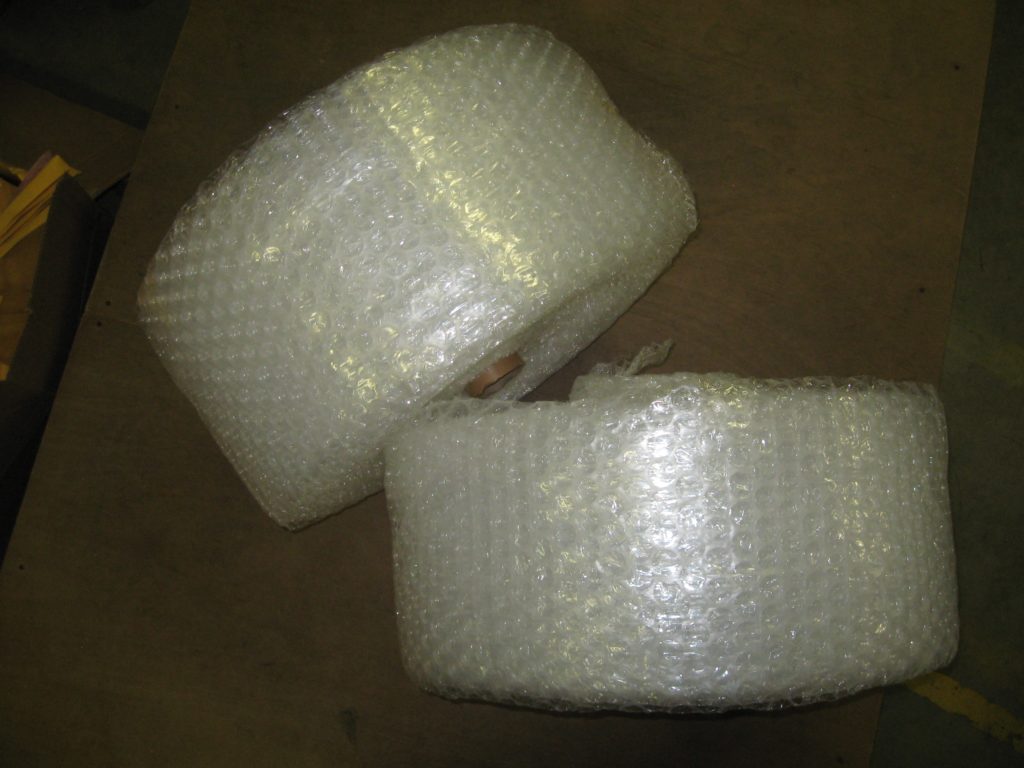
Learn how to pack fragile items with bubble wrap using proper wrapping techniques, cushioning, and practical tips to help prevent shipping damage.

Vinyl records need careful packaging when they’re shipped. Even if the disc arrives intact, a bent album corner, split jacket seam, or scratched surface can
We often can grant special pricing for custom or large orders. Request a custom quote below!