

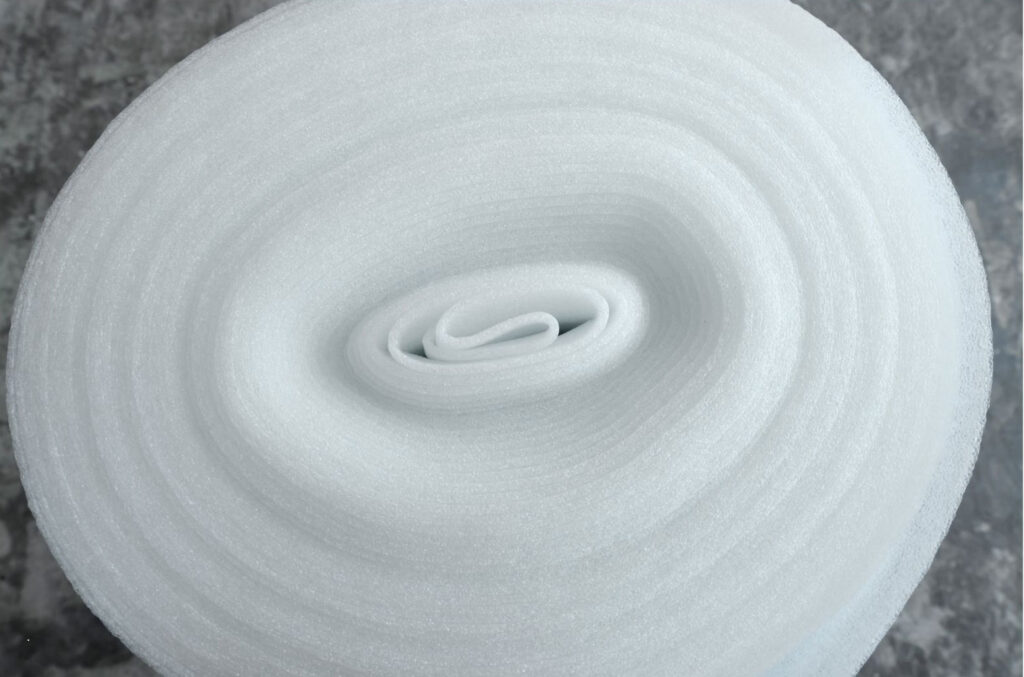
Packaging Foam Rolls: Types, Thicknesses, Uses & How to Choose
Choosing packaging foam rolls may seem straightforward until you start comparing different materials, thicknesses, widths, and roll lengths. A thin foam sheet might be suitable
Need bulk pricing or have a specific shipping request? Contact us!
A product can leave a warehouse in perfect condition and still arrive with scratches, scuffed surfaces, chipped edges, or broken components. Often, the problem isn’t simply a lack of packaging. It may be inadequate coverage, movement inside the shipping carton, or insufficient protection around vulnerable parts.
Packaging foam rolls can help reduce these risks by creating a protective layer around products and separating surfaces that might otherwise rub together. However, wrapping an item in foam doesn’t automatically make it ready for shipping. How the material is applied, secured, and combined with other protective packaging matters.
The techniques in this guide assume the foam is appropriate for the product. Material selection is a separate consideration, particularly where thickness, density, or surface sensitivity matters. Different packaging foam types and thicknesses offer different protective characteristics, and the foam should be selected before the packing process begins.
This guide focuses on practical foam-wrapping techniques, surface protection, interleaving, and preparing protected products for shipment.
Flexible packaging foam can perform several protective functions, depending on its properties and how it is used.
Surface protection: A compatible, non-abrasive foam layer separates a product’s finish from cartons, neighboring items, and other packaging materials. This helps reduce scratches, scuffs, and abrasion.
Light cushioning: Foam provides a compressible layer between the product and its surroundings. Depending on thickness, density, and compression behavior, it may help moderate minor impacts and handling forces.
Product separation: Foam sheets can prevent adjacent items or stacked components from rubbing directly against one another.
Contact and movement protection: Properly positioned foam can help reduce unwanted contact between components. However, foam wrapping alone may not prevent the product from shifting inside its carton.
These functions are related but shouldn’t be confused. A thin foam sheet may protect a polished surface effectively without offering enough cushioning for a significant impact. Effective shipping protection therefore considers the entire package, including the foam, product position, outer carton, additional cushioning, and any necessary structural supports.
Good protection begins before the foam is applied. Inspect the product and identify its vulnerable areas. Look for delicate finishes, projecting parts, sharp edges, exposed corners, loose attachments, and surfaces that could be damaged by pressure.
A painted furniture panel, for example, may require broad surface coverage. A metal component with a projecting fitting might need separate protection around that feature before the main wrap is applied.
The product should also be clean and dry. Dust, grit, or other debris trapped between a finished surface and its protective covering can cause abrasion during handling. Gather the materials needed for the shipment:
The carton should provide room for appropriate protection around the contents without forcing the box to bulge or compressing vulnerable parts.
Even foam described as non-abrasive may not be appropriate for every finish. Painted, lacquered, polished, coated, or otherwise sensitive surfaces can react differently to prolonged contact, pressure, heat, or certain packaging materials.
Where compatibility is uncertain, test the foam under representative storage and shipping conditions. Some products may need an additional protective interlayer.
Valuable artwork, delicate collectibles, and conservation-sensitive objects may require specialized materials and handling methods rather than ordinary commercial wrapping.
The exact technique depends on the product’s shape, finish, weight, and vulnerability. The following process provides a practical starting point for many surface-sensitive products.
Measure the item and determine which surfaces require protection. For flat products, choose a section large enough to cover the exposed surfaces and relevant edges. For irregularly shaped items, separate pieces may provide better coverage than one large sheet.
Allow enough material for secure overlap, but avoid excessive folding or bunching around fragile areas. If the foam roll is perforated, check whether the available sheet lengths suit the product. Otherwise, cut the material to an appropriate length. The objective is consistent coverage with minimal excess material—not simply using as much foam as possible.
Place the foam against the surfaces that need protection. For smooth panels, keep the material reasonably flat so it provides consistent coverage. On curved or irregular surfaces, allow the foam to follow the shape without stretching it tightly across fragile features.
Check that no dirt or hard particles are trapped beneath the wrap. Where direct foam contact is unsuitable for a sensitive finish, use an appropriate protective interlayer before applying the foam. The finished layer should create separation without introducing pressure points or other risks.
Bring the foam around the item, overlapping adjoining sections where appropriate. For broad surfaces, aim for smooth coverage that doesn’t leave exposed gaps. If several pieces are necessary, position them so that the vulnerable surfaces remain protected.
Avoid pulling the material excessively tight. Doing so may compress the foam and reduce its available cushioning depth. Irregular shapes often require more attention. A product with a projecting handle, bracket, or fitting may need separate protection around that feature rather than forcing the main wrapping layer over it.
The foam should follow the product’s shape without placing unnecessary pressure on delicate components.
Edges and corners are often vulnerable because handling forces can become concentrated over relatively small areas. A single thin foam layer may protect the broad surface of a product while leaving its corners inadequately protected.
For finished panels, additional edge protection may be appropriate. For products with projecting components, use suitable cushioning or supports that prevent those features from bearing the load. Avoid creating tightly folded bundles directly over fragile corners or fittings.
Where the product is heavy or particularly delicate, purpose-made corner protectors or other structural materials may be more appropriate than extra foam wrapping alone.
After covering the relevant surfaces, secure the material so it won’t loosen during handling. Where suitable, apply tape to overlapping foam sections rather than directly to the product. Adhesives may leave residue or affect sensitive finishes when removed.
The securing method should hold the covering in place without compressing it excessively. Check that the foam remains positioned correctly when the product is handled gently. Pay particular attention to corners, edges, and areas where sections overlap. The wrapping should be secure but not restrictive.
A foam-wrapped product still needs appropriate outer packaging. Use a corrugated carton with adequate strength and sufficient space for cushioning around the product. The appropriate clearance depends on the item’s weight, fragility, and protective requirements.
Position the item so that vulnerable surfaces and features aren’t pressed directly against the carton walls. Additional cushioning, dividers, or fitted supports may be needed to keep the product properly positioned.
Highly fragile items may require a double-box arrangement or other packaging methods recommended by the manufacturer or shipping carrier. Thin foam wrapping shouldn’t be treated as a substitute for these measures.
Once the product is positioned, address any remaining space that could allow unwanted movement. Use appropriate cushioning or supports to keep the item stable. Avoid packing the carton so tightly that the contents are compressed or the box becomes distorted.
Before sealing, check whether the product can shift noticeably when the carton is moved gently. This is a useful basic check, although it doesn’t demonstrate that the packaging can withstand drops or prolonged vibration.
Close the carton without forcing its flaps and seal it with suitable packaging tape. The commonly recommended H-taping method secures the main seam and adjoining edges of a conventional corrugated carton.
The finished package should protect the contents without relying on the foam wrap alone to absorb all shipping forces.
Packaging foam rolls are also useful for interleaving, where protective sheets are placed between products or components that would otherwise touch. This technique is particularly relevant for stacks of finished metal sheets, glass panels, furniture components, decorative boards, and manufactured parts.
A suitable foam sheet can form a protective barrier between adjacent surfaces, reducing direct contact during handling and transportation. The material should cover the relevant contact area and remain positioned throughout the shipment.
Where stacked items have fragile edges or corners, additional separators or supports may be needed to prevent concentrated pressure. Interleaving protects surfaces, but it doesn’t automatically prevent movement. The entire group may still need dividers, trays, edge supports, or other restraints.
Interleaving is useful when several compatible products are packed together and the main concern is surface abrasion. Individual wrapping may be more appropriate when products differ substantially in shape, have exposed vulnerable features, or require separate cushioning.
The two techniques can also be combined. Individual products may be covered with protective foam, while additional sheets separate them within a larger package. The choice depends on the types of contact and movement that could cause damage.
The basic principles remain consistent, but the application should reflect the product’s likely failure points.
Furniture components are often vulnerable to scuffs, scratches, and damage around exposed edges. Suitable foam can protect painted, polished, or laminated surfaces during handling and shipment.
Flat components such as cabinet doors and shelving panels may also benefit from interleaving when multiple pieces are transported together.
However, foam wrapping should not be expected to support the weight of a heavy panel or protect an exposed corner from a significant impact. Edge protectors, rigid supports, or stronger outer packaging may be necessary.
Foam can provide a soft separation layer around delicate surfaces, but glass is also susceptible to breakage from concentrated impacts. Small glass objects should generally be protected individually so they cannot strike one another inside a carton.
Mirrors, glass panels, and framed items may require additional edge and corner protection, together with cushioning that prevents direct contact with the outer packaging.
For especially fragile items, a properly designed double-box system or fitted support may be appropriate. The important distinction is that surface protection alone is not sufficient breakage protection.
Foam may help protect the external surfaces of electronic devices and separate components during transit. However, electronic products introduce other risks, including pressure on screens, damage to connectors, and electrostatic discharge.
Ordinary polyethylene foam shouldn’t be assumed to provide ESD protection. Static-sensitive components require materials with appropriate verified electrical properties.
Avoid placing pressure on switches, displays, connectors, or fragile projections. Loose accessories and cables should also be secured so they cannot rub against or strike the device. Where available, follow the manufacturer’s packaging instructions for the equipment.
Industrial products may be heavy, have sharp edges, or contain precision-machined surfaces. Foam can help prevent abrasion between finished components and provide separation during storage or transportation.
However, heavy items may compress thin foam significantly, while sharp edges can cut through unsuitable material. For these shipments, foam may need to be combined with stronger dividers, trays, restraints, or structural supports.
The packaging should prevent movement without concentrating excessive pressure on vulnerable features.
Framed artwork and display materials often need protection from abrasion, pressure, and damage to vulnerable corners. Appropriate foam may help separate frames or protect certain exterior surfaces. However, direct contact with paintings, delicate finishes, or conservation-sensitive materials can be unsuitable.
For valuable or irreplaceable objects, specialist conservation and shipping guidance should take precedence. Depending on the object, packaging may also require rigid face protection, corner supports, and a suitable carton or crate.
Flexible foam wrapping is useful, but its protective capabilities have limits. Thin foam is especially effective for certain surface-protection applications. Depending on its properties, it may also contribute light cushioning.
However, a few layers of foam cannot be assumed to withstand significant impacts, heavy compression, or repeated drops. Additional protection may be necessary for:
Depending on the product, appropriate solutions may include structured cushioning, corrugated dividers, protective inserts, corner supports, or double boxing.
Bubble wrap can sometimes serve as an additional cushioning material. Its protective behavior depends on the size and construction of its air-filled cells, which is why bubble wrap sizes matter when selecting cushioning for different products.
Foam and bubble wrap can therefore perform complementary roles in some shipments. The important consideration is whether each layer addresses a genuine protection requirement.
Many packing failures result from small decisions that leave products vulnerable despite appearing well protected. Leaving corners or projecting parts exposed. A product may have complete surface coverage while its most vulnerable features remain unprotected.
Wrapping too tightly. Excessive tension can compress foam and create unwanted pressure on fragile components.
Applying tape directly to sensitive finishes. Adhesives can leave residue or damage delicate surfaces during removal.
Trapping dirt or grit beneath the foam. Small particles can abrade finished surfaces when the package moves.
Packing multiple fragile products together without separation. Items may still collide, even when the group is wrapped in foam.
Relying on foam as the only cushioning for fragile shipments. Surface protection is not the same as an engineered cushioning system.
Leaving too much space inside the carton. A wrapped product can still strike the carton walls if it is allowed to move.
Overpacking the carton. Excessive compression can damage products or distort the outer package.
These problems are best addressed by considering the whole package rather than simply adding more wrapping material.
Before sealing the carton, make sure the shipment meets the following conditions:
This checklist supports consistent everyday packing practices. For high-value, unusually fragile, or specialist products, the packaging may also require testing or validation against relevant handling and transportation conditions.
Can packaging foam rolls prevent scratches during shipping?
Compatible, non-abrasive foam can help reduce scratches by separating a product’s surface from other objects and packaging materials. The product should be clean before wrapping, and the foam must remain correctly positioned during transport.
Should foam be wrapped tightly around a product?
The foam should be secure enough to stay in place, but not so tight that it compresses excessively or places pressure on fragile features. The appropriate fit depends on the product’s shape and surface sensitivity.
Can foam rolls be used between stacked products?
Yes. Foam sheets can separate compatible surfaces in stacked products. However, additional restraints or supports may be needed to prevent shifting and concentrated pressure.
Is foam wrapping enough for shipping glass products?
Not necessarily. Foam can provide surface protection and some cushioning, but glass products may also require structural support, edge protection, additional cushioning, or double boxing.
Can ordinary foam be used for electronics?
Foam may provide physical protection for device exteriors, but static-sensitive components can require verified ESD packaging. Ordinary foam shouldn’t be assumed to provide electrostatic protection.
How many foam layers are needed for shipping?
There is no universal number. The appropriate amount depends on the foam’s properties, the product’s weight and fragility, and the other cushioning and structural elements in the package. Adding layers without addressing movement or impact risks doesn’t guarantee better protection.
Packaging foam rolls can provide valuable surface protection, separate components, and contribute lightweight cushioning. Their effectiveness depends on where the material is placed, how it is secured, and how the product is supported inside the finished package.
A reliable packing method begins by identifying likely damage points. It then protects vulnerable surfaces, prevents unwanted contact and movement, and adds the cushioning or structural support needed for the shipment.
The objective isn’t simply to wrap products in more material. It’s to protect the right areas and make every protective layer serve a clear purpose.
Choosing packaging foam rolls may seem straightforward until you start comparing different materials, thicknesses, widths, and roll lengths. A thin foam sheet might be suitable
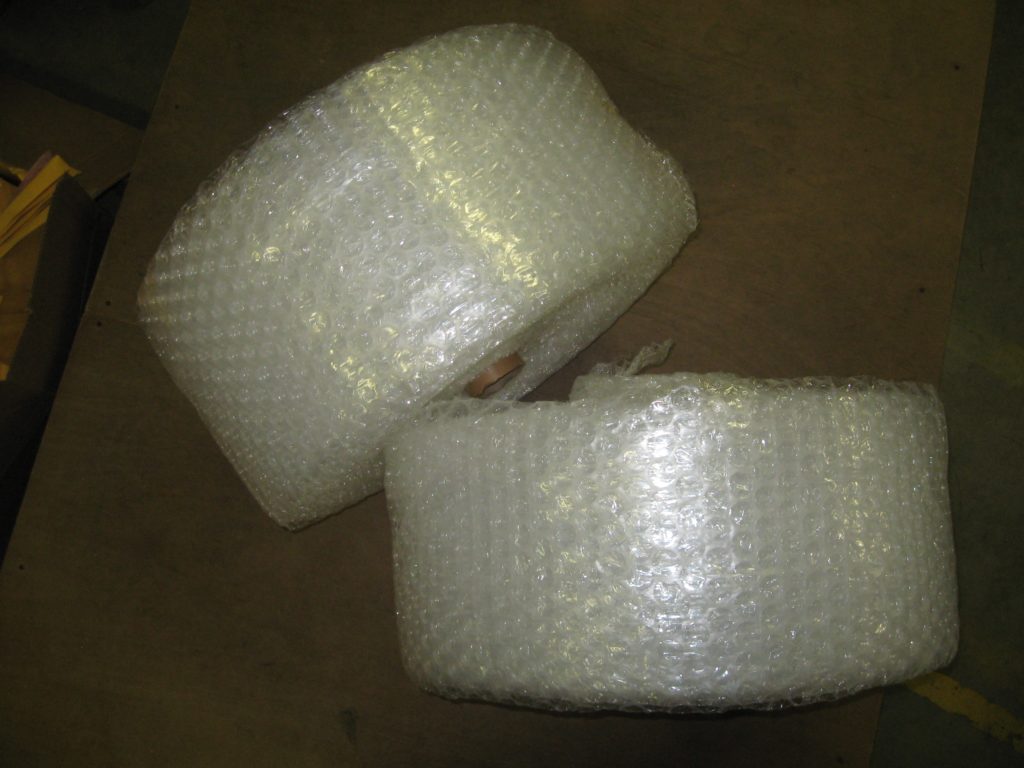
Learn how to pack fragile items with bubble wrap using proper wrapping techniques, cushioning, and practical tips to help prevent shipping damage.

Vinyl records need careful packaging when they’re shipped. Even if the disc arrives intact, a bent album corner, split jacket seam, or scratched surface can
We often can grant special pricing for custom or large orders. Request a custom quote below!