


Bubble Wrap Sizes Explained: How to Choose the Right Size for Shipping
Bubble wrap comes in more than one size, and those differences matter when you’re trying to protect products during shipping or storage. Smaller bubbles conform
Need bulk pricing or have a specific shipping request? Contact us!
Reflective bubble insulation looks deceptively simple: a layer of air-filled bubbles combined with one or more reflective surfaces. But its thermal performance depends on more than the thickness of the material.
Unlike conventional insulation that primarily slows heat moving through a material, reflective insulation is designed to address radiant heat transfer. That distinction explains both where reflective bubble insulation can be useful and why the way it is installed matters so much.
Understanding how radiant heat moves—and the role of the air space next to a reflective surface—can help you evaluate this type of insulation more realistically.
Heat can move through a building or enclosed space in three primary ways: conduction, convection, and radiation.
Conduction occurs when heat passes through materials that are in direct contact. If one side of a solid material is warmer than the other, heat naturally moves toward the cooler side.
Convection involves heat transfer through the movement of air or another fluid. Warm air rises and cooler air falls, creating currents that can transfer heat through a space.
Radiation works differently. Thermal energy travels as electromagnetic waves and can cross an open space before being absorbed by another surface. You can experience this when standing near a hot surface even without touching it.
Most conventional insulation materials are primarily intended to slow conductive and convective heat flow. Reflective insulation is designed to reduce the radiant component of heat transfer.
Reflective bubble insulation typically combines a reflective foil surface with a polyethylene bubble layer or similar core.
The reflective surface has low emissivity, meaning it emits relatively little radiant energy toward the adjacent space. When correctly positioned next to an air space, it can therefore reduce radiant heat transfer across that space.
The bubble layer serves a different function. The enclosed air pockets provide separation and some resistance to conductive heat flow, while also creating a lightweight structure for the reflective surfaces.
This means reflective bubble insulation shouldn’t be thought of simply as “thin conventional insulation.” Its performance comes from the combined assembly, including the reflective surface and the conditions around it.
That distinction becomes especially important when considering installation.
One of the most important principles of reflective insulation is also one of the easiest to overlook:
A reflective surface needs to face an air space to effectively reduce radiant heat transfer.
Radiation travels across space. If the reflective surface is pressed directly against another solid material, heat can instead move between those materials primarily through conduction. In that situation, the reflective surface cannot perform the same radiant-control function.
For example, placing reflective material between framing members with an adjacent air cavity creates a different thermal assembly from sandwiching the same material tightly between two solid surfaces.
The U.S. Department of Energy specifically notes that reflective insulation systems require an air space adjacent to the reflective surface to work properly.
So when evaluating reflective bubble insulation, asking where the air space will be is just as important as asking about the material itself.
The terms are closely related, but they don’t always describe exactly the same thing.
A radiant barrier generally refers to a highly reflective, low-emissivity surface installed so that it faces an open air space. A common example is reflective material installed in an attic to reduce radiant heat transfer from a hot roof toward the surfaces below.
Reflective insulation typically describes a system in which reflective surfaces are combined with another material or enclosed air spaces. Foil-faced bubble products are one example.
Both rely on controlling radiant heat transfer, which is why the terms sometimes appear interchangeably in everyday discussions. But the construction of the products and their tested thermal performance can differ.
The important point is that a shiny surface by itself isn’t automatically equivalent to a complete insulation system.
The bubbles aren’t primarily there to “reflect” heat. That is the job of the reflective surface.
Instead, the bubble layer contains small pockets of air and provides physical separation between surfaces. Air is a relatively poor conductor of heat when it is contained and prevented from circulating freely, which is why trapped air appears in many types of insulation systems.
The bubble structure also makes the material thin and flexible compared with many bulk insulation products.
However, this shouldn’t lead to the assumption that a thin bubble layer provides the same conductive resistance as several inches of fiberglass, mineral wool, cellulose, or rigid foam.
They are different insulation approaches designed to influence heat transfer in different ways.
This is where comparisons can become confusing.
R-value measures resistance to heat flow, particularly conductive heat transfer through an assembly. Conventional insulation products are commonly compared using their R-values.
Reflective insulation systems are more complicated because their thermal performance can depend heavily on the assembly in which they’re installed—including the size and orientation of adjacent air spaces and the direction of heat flow.
As a result, an R-value associated with a reflective insulation system should not automatically be interpreted as the inherent R-value of the thin reflective material alone.
If a manufacturer provides an R-value, look at the conditions under which it was determined. The relevant question isn’t simply:
“What is the R-value of this roll?”
It is:
“What thermal performance does this installed assembly provide under the stated conditions?”
That distinction makes comparisons with conventional insulation much more meaningful.
Because reflective materials address radiant heat, they’re commonly considered in applications where radiant heat transfer is significant and an appropriate air space can be maintained.
Depending on the product and installation design, examples can include:
But the presence of radiant heat doesn’t automatically mean reflective bubble insulation is the correct solution.
Climate, building design, moisture management, air sealing, existing insulation, local building codes, fire-performance requirements, and the intended assembly all need to be considered.
For building-envelope applications in particular, insulation shouldn’t be selected independently of the rest of the structure.
Not necessarily.
Reflective insulation and conventional bulk insulation address heat transfer differently. Fiberglass, mineral wool, cellulose, and foam products are commonly used to provide substantial resistance to conductive heat flow through walls, ceilings, floors, and other building assemblies.
Reflective systems can reduce radiant heat transfer when installed under appropriate conditions.
In some assemblies, the two approaches can therefore be complementary rather than interchangeable.
For example, a building may already have bulk insulation to resist conductive heat flow while using a properly designed reflective layer to address radiant heat transfer elsewhere in the assembly.
The appropriate combination depends on climate, construction type, code requirements, and the thermal objective.
Several factors can determine how effectively a reflective system performs.
Without an appropriate adjacent air space, the reflective surface cannot perform its intended radiant-control role in the same way.
The position and direction of the reflective surface can affect the assembly’s performance because radiant heat transfer depends on the surfaces facing one another and the direction of heat flow.
A reflective surface works best when it remains reflective. In some installations—particularly horizontal upward-facing surfaces—dust accumulation can reduce effectiveness over time.
Gaps, compression, unintended contact with other materials, and incorrect positioning can change how the assembly behaves.
Radiant barriers tend to offer greater benefit where radiant heat gain represents a significant part of the cooling load. Their contribution can be smaller in other climates or in assemblies that already contain high levels of conventional insulation.
Foil-faced products can have very low vapor permeability. Depending on climate and placement within an assembly, that characteristic can affect moisture movement and condensation risk.
For building applications, vapor control should therefore be considered as part of the overall assembly—not treated as an afterthought.
Perhaps the most useful way to understand reflective bubble insulation is to stop thinking about the roll as an isolated material.
Its performance depends on how the complete assembly manages heat.
The reflective surface is intended to reduce radiant heat transfer. The bubble layer provides enclosed air spaces and physical separation. Adjacent air spaces can be critical to reflective performance. Other insulation materials may be responsible for much of the assembly’s resistance to conductive heat flow.
Installation, climate, moisture conditions, and the surrounding materials all influence the final result.
That is why two installations using the same reflective bubble product can perform differently if their assemblies are configured differently.
Reflective bubble insulation works primarily by helping control radiant heat transfer, rather than simply relying on material thickness.
The reflective surface, bubble layer, adjacent air space, and overall construction all contribute to how the system performs. Most importantly, the reflective surface needs an appropriate air space to perform its radiant-control function effectively.
Understanding those principles makes it easier to determine when reflective insulation is relevant—and when conventional insulation, air sealing, or a combination of approaches may be more appropriate.
For applications where reflective bubble material is appropriate, Cutting Edge Packaging Products offers double-foil bubble reflective insulation in multiple roll sizes. Review the available configurations and installation requirements before selecting material for a specific application.
Bubble wrap comes in more than one size, and those differences matter when you’re trying to protect products during shipping or storage. Smaller bubbles conform
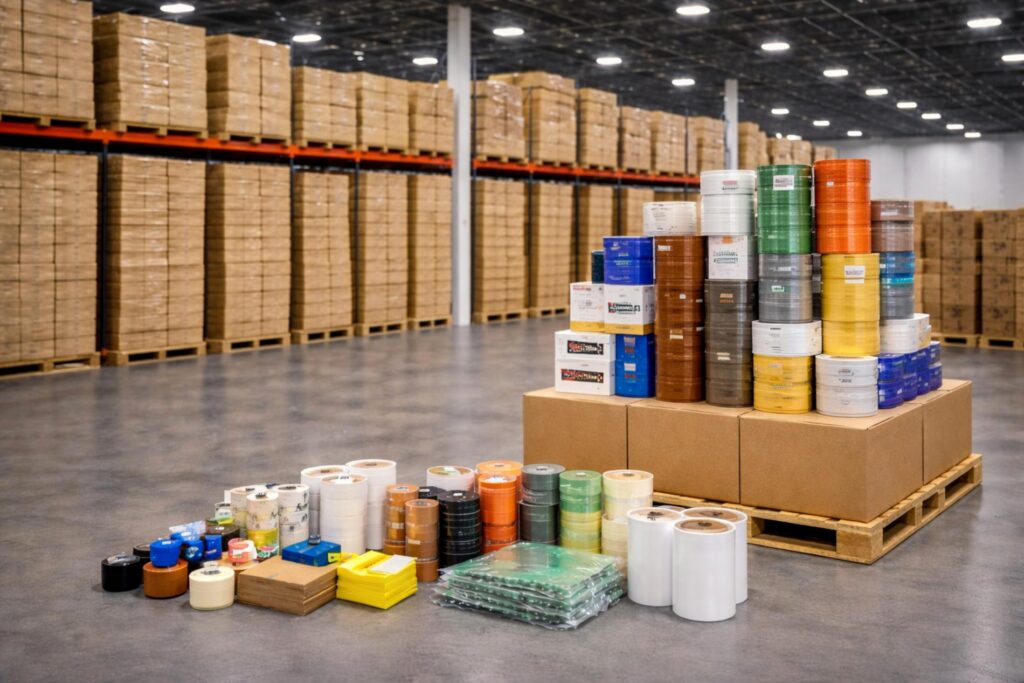
Cutting Edge announces the launch of 4Tapes.com, a new online destination for packing tape, shipping tape, duct tape, filament tape, kraft tape, and industrial adhesive products for ecommerce and warehouse operations.

Why Packaging Foam Rolls Are Essential for Secure Shipping When it comes to ensuring that products arrive safely at their destination, packaging foam rolls play
We often can grant special pricing for custom or large orders. Request a custom quote below!